
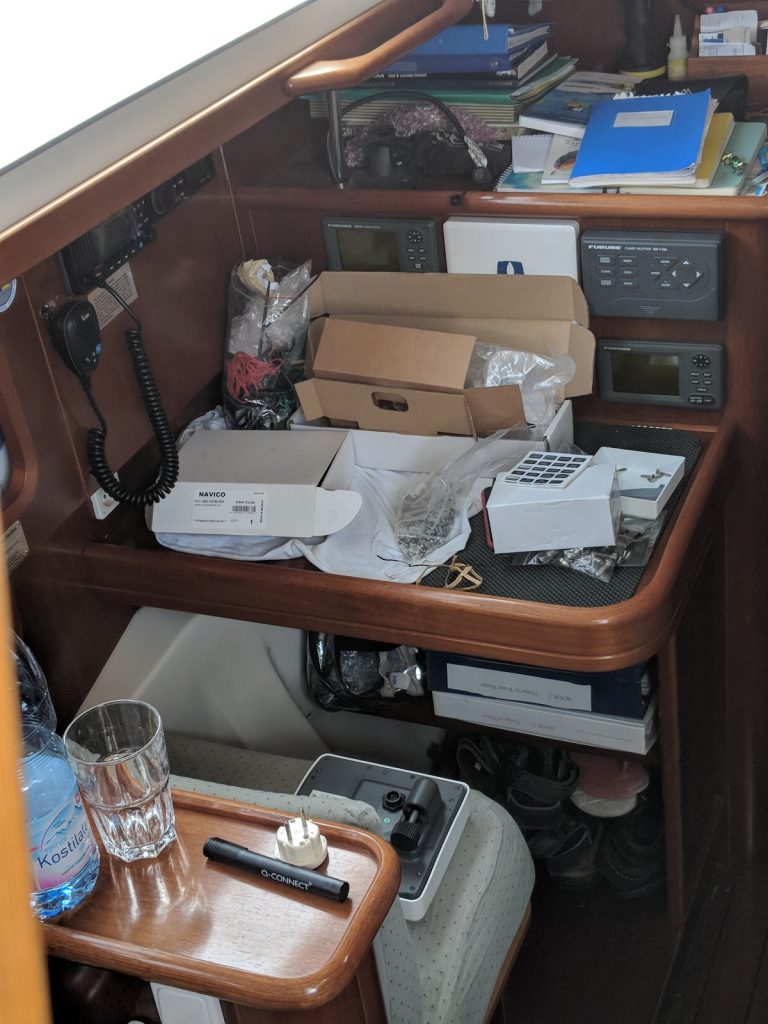
It’s Thursday in Cleo. As I sit in the cockpit, Waypoint have removed the sails and running rigging, ready to un-step the mast. From the saloon comes the sound of drilling and sawing as Andy, the electronics engineer who arrived yesterday to fit our new kit, enlarges the holes in the woodwork above the chart table. “I don’t like it,” I wail to John, “They’re taking my boat apart.”
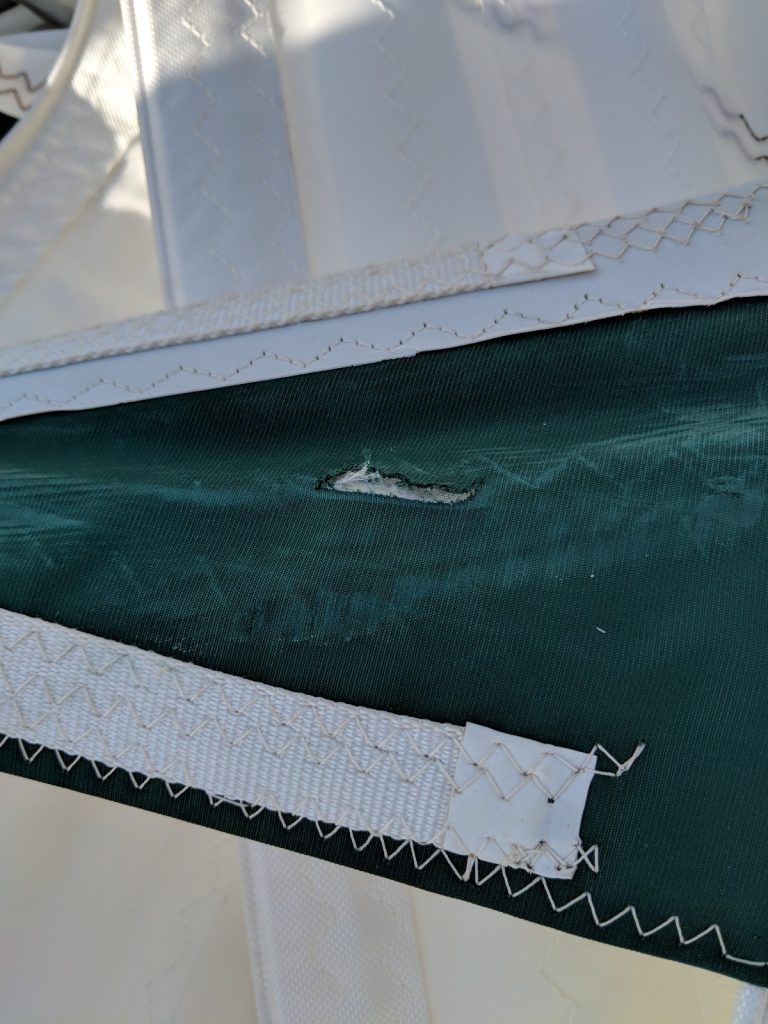
Even with the sails off we can see the bend in the Genoa furling. The 2 Dimitris (our team from Waypoint) show us the damage to the Genoa itself.
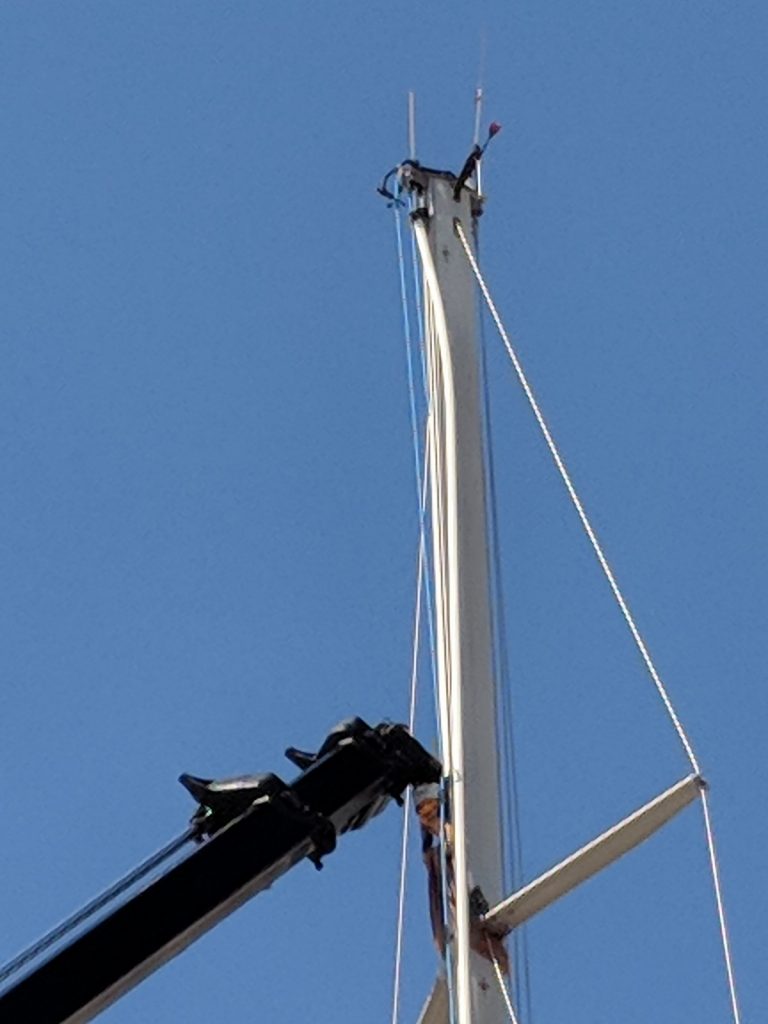
What about the mast? The crane arrives and we all have to get off the boat. It’s a very efficient and practiced process – and for them, it’s routine. Not so for us, watching fascinated and anxious. Finally, the mast is resting on trestles on the ground so we can go and take a closer look.
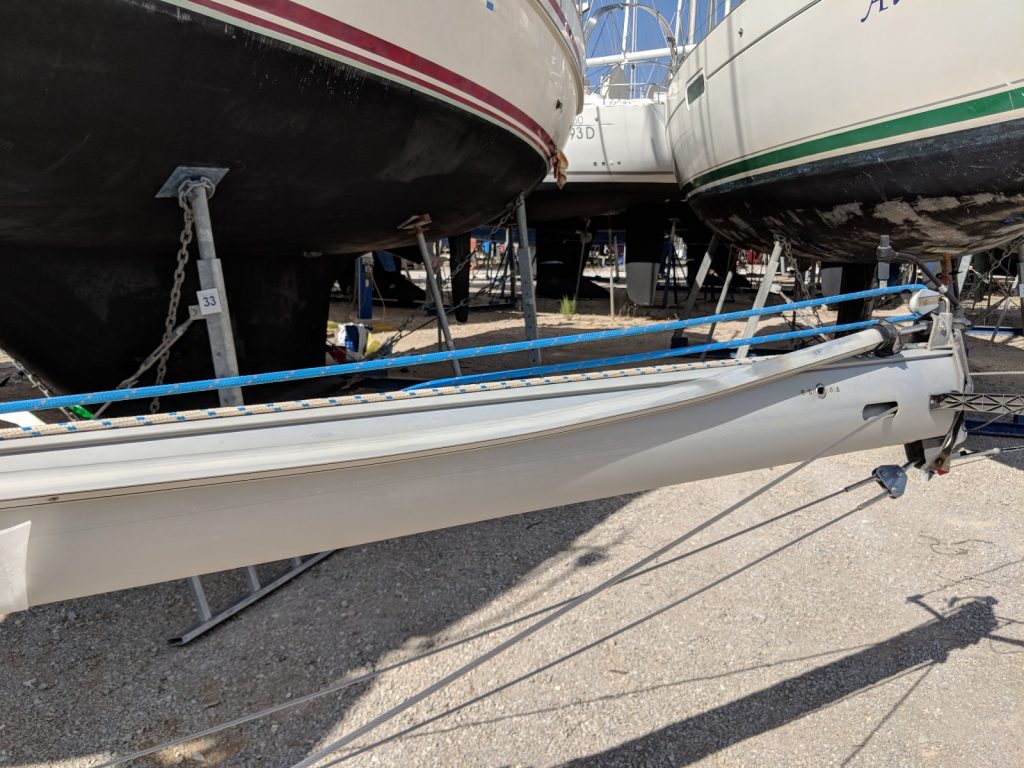
“Oh, my goodness!”
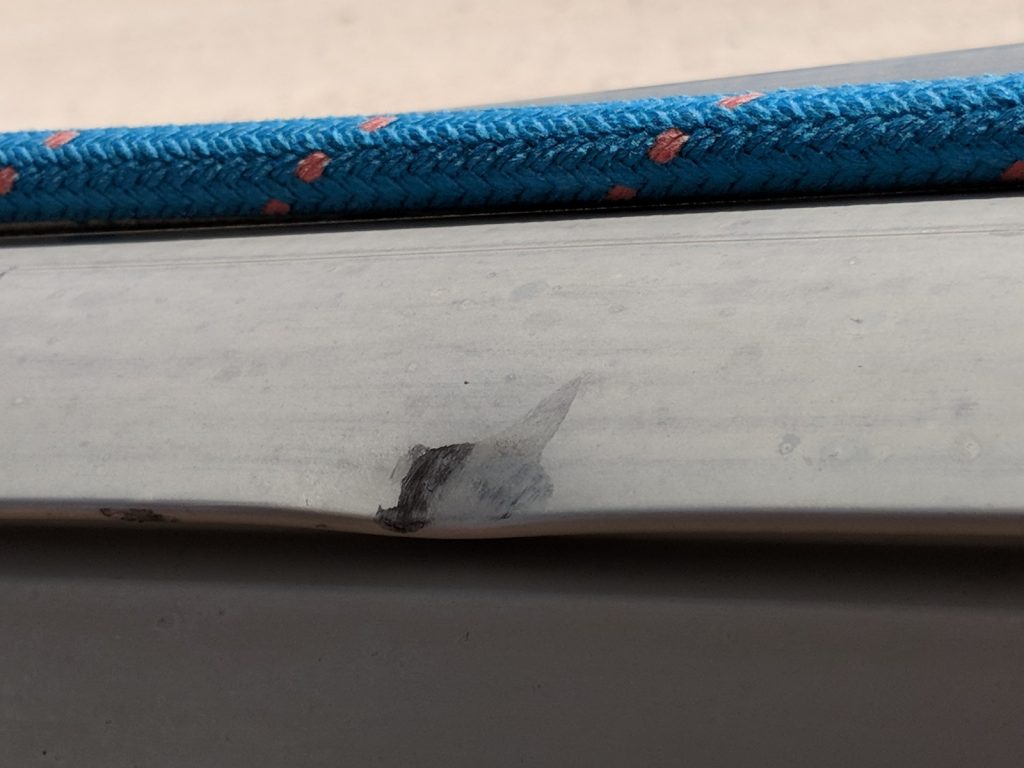
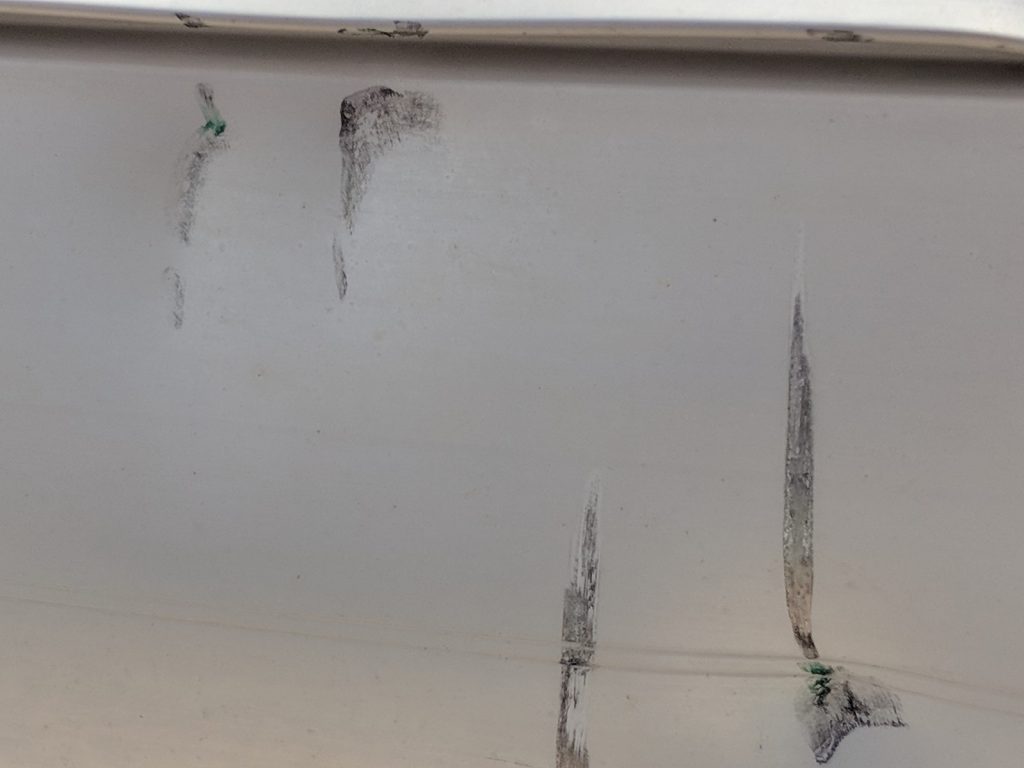
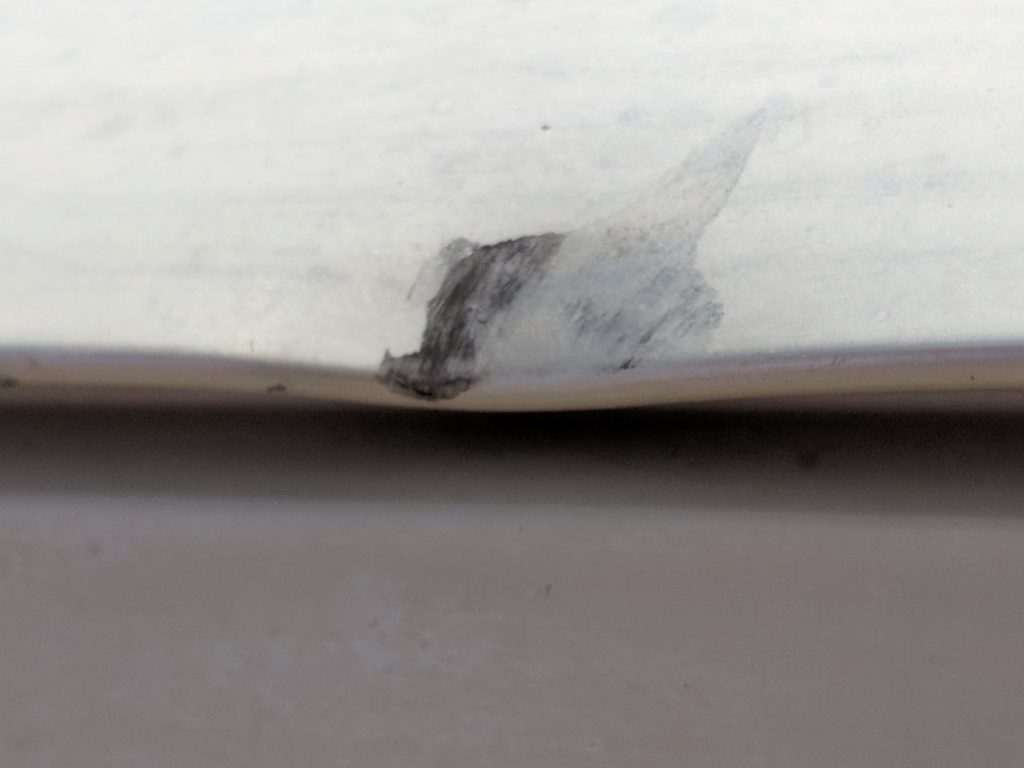
“Look at this!”
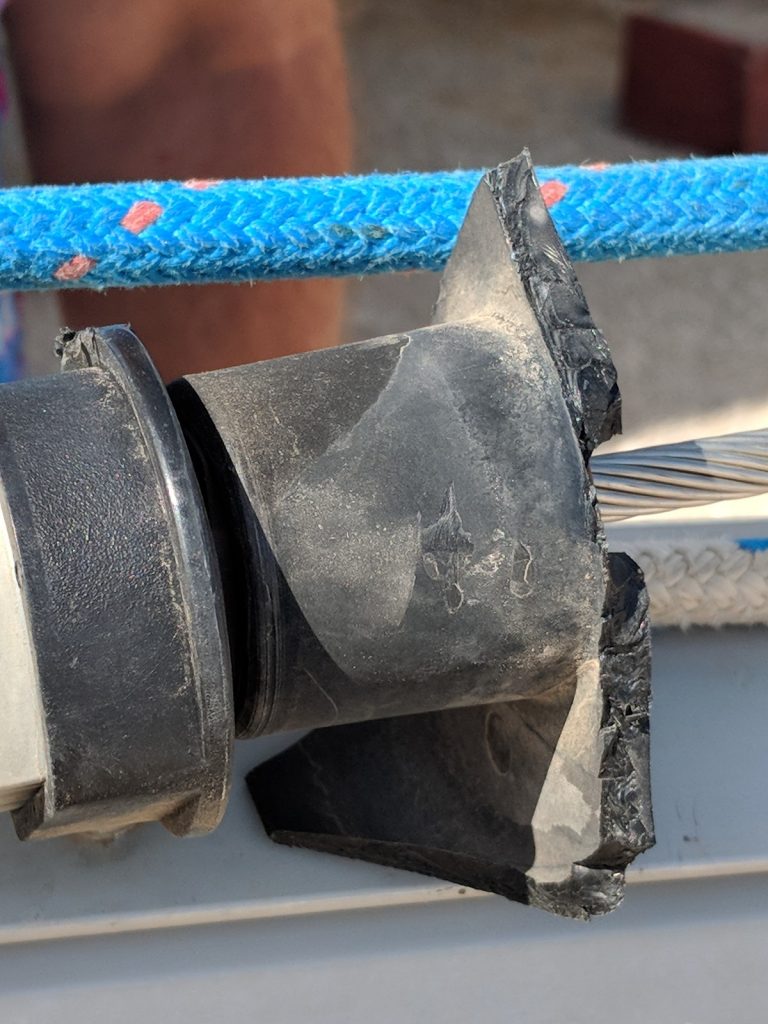
“Have you seen the wind sensor? It’s only hanging on by its cable!”
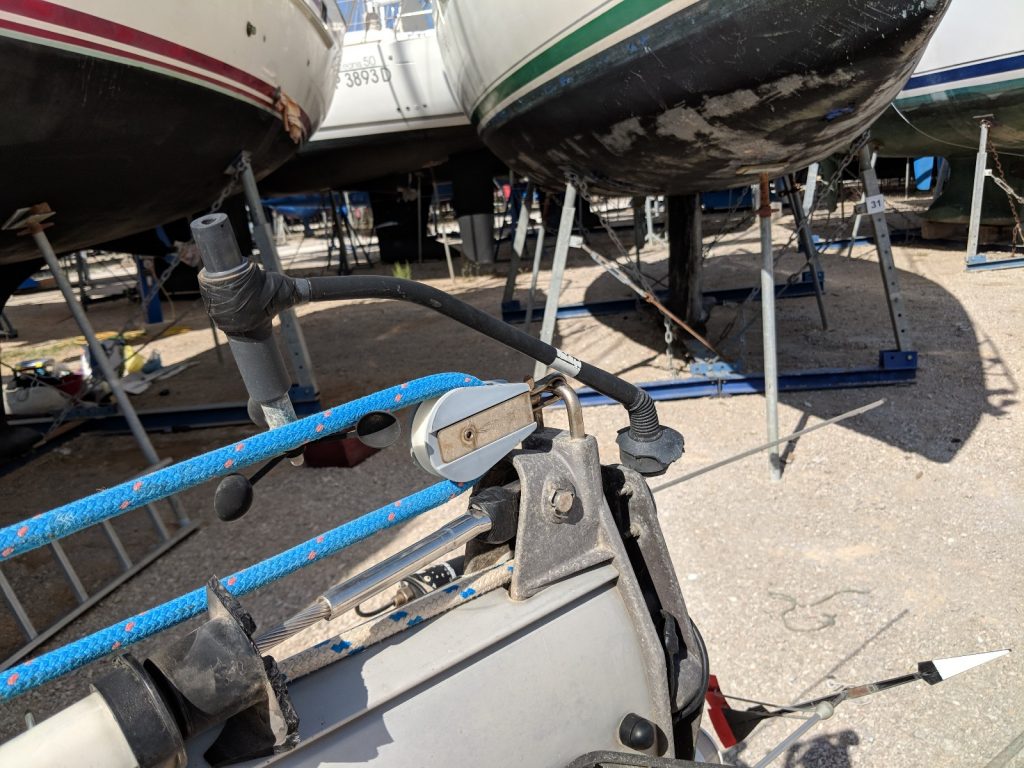
We examine everything, appalled and oddly fascinated. It’s as though the terror of that 36 hours is only now being validated by the evidence before us. It really was that bad.
Over the next few days, other people come to look and comment. Others have their stories of “That Night.” Several who were on the pontoon with us need new masts. We read about one live-aboard who lost everything when his boat sank just north of the Lefkas bridge. Other boats were sunk or damaged in the Peloponnese and Aegean. We were luckier than some. And thank goodness for insurance.
We’ve stored up a list of harbours which were fine in NE winds and we’ve noted those that suffered most. We’re trying to learn useful lessons, but not beat ourselves up about our decisions (finding better shelter, leaving the pontoon sooner.) We’re trying to build on the things we did right – leaving the pontoon when we did, getting anchored safely, motoring away from the collision. There’s always more to learn.